Atlanta, Georgia
Client: Atlanta Housing Authority
Size: 1.4 acres
Completion Date: 2024
Awards: 2025 Award of Excellence–Adaptive Reuse, City of Atlanta Urban Design Commission
Collaborators: Moody-Nolan Architects, Palacio Collaborative, Lowe Engineers LLC, Jordan & Skala Engineers
Reclaiming a historic site to rebuild community connection.
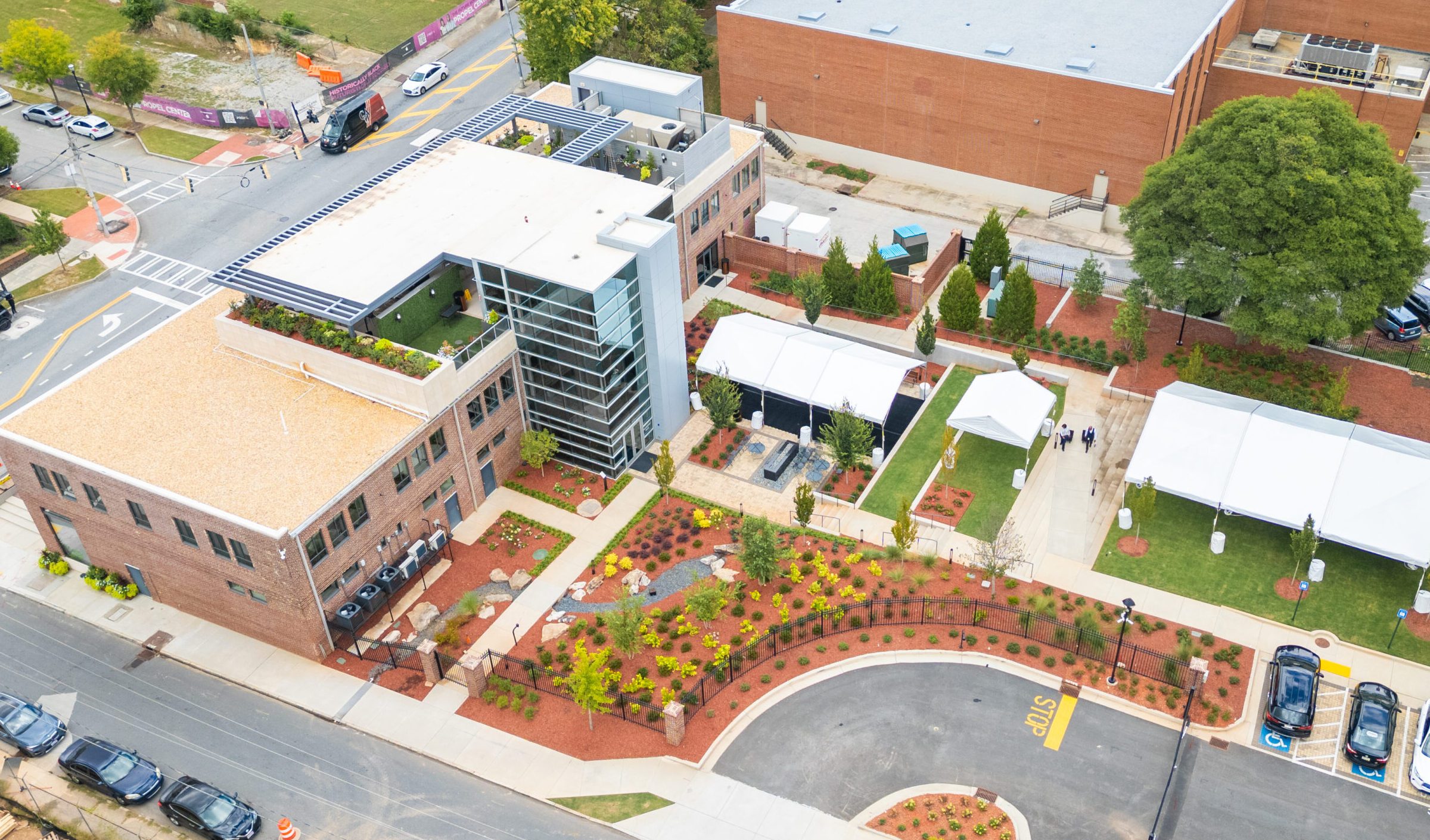
HGOR led the pedestrian open space design for the renovation of Roosevelt Hall, the last remaining building from the University Homes—the United States’ first federally funded public housing project for African American families, originally completed in 1938. The project reestablishes the 1.4-acre site as a vibrant community gathering space. Landscape architecture played a central role in reconnecting the building to its surroundings, addressing significant grade changes while creating accessible, flexible outdoor environments. Through careful integration of circulation, event spaces, and sustainable infrastructure, the design honors the site’s historic legacy while supporting contemporary community life.
Design Strategy: Reconnecting the Public Realm
The renovation sought to return Roosevelt Hall to its original role as a social and civic anchor. HGOR’s design organizes the 1.4-acre site around a series of connected pedestrian spaces that encourage gathering, movement, and interaction. Along historic Atlanta Student Union Boulevard, the streetscape was redesigned to support outdoor dining and retail engagement while addressing substantial cross slopes. The result is an active edge that strengthens the relationship between the building and the street, enhances walkability, and encourages public life to extend beyond the building footprint into the surrounding neighborhood.
Grade Transitions & Universal Access
One of the project’s primary challenges was navigating more than 30 feet of grade change across the site. HGOR transformed this constraint into an opportunity by incorporating terraced seating, integrated stair connections, and clearly defined circulation routes. ADA-accessible pathways were seamlessly woven into the primary travel routes, ensuring equitable access throughout the site while maintaining a cohesive and intuitive pedestrian experience.
Expanding Program Through Elevated Space
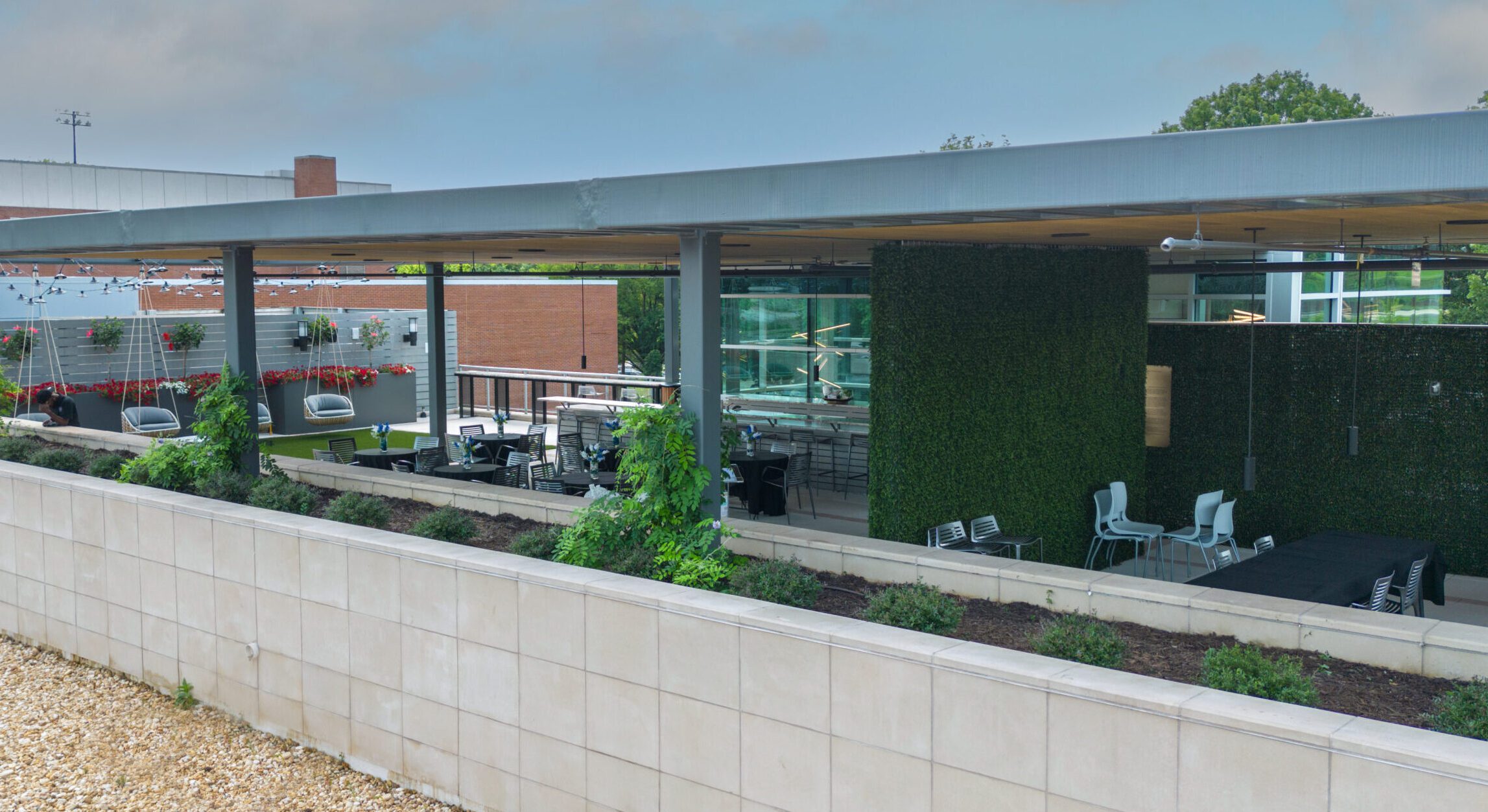
In addition to the ground-level open space, HGOR designed a 3,600-square-foot roof terrace that expands the site’s outdoor program. The terrace provides flexible space for events, meetings, and receptions, offering new opportunities for gathering while activating the building vertically and maximizing limited site area. Rooftop landscape elements were carefully positioned to frame views and create welcoming outdoor rooms that support both daily use and larger community events.
Sustainability Embedded in the Landscape
Sustainability strategies were fully integrated into the site design. The landscape features 100% native planting, supporting local ecosystems and reducing long-term maintenance. Rainwater is captured through an on-site cistern and reused for irrigation, while stormwater management features are incorporated seamlessly into the overall design—reinforcing environmental performance without compromising the character of the space.