
About Us
Three decades of leadership in planning and landscape architecture.
Since 1992, HGOR has been guided by a philosophy of creating meaningful, high-performing environments that serve more than a single purpose. We call this our SEE Philosophy—the umbrella over all of our work efforts and the standard by which we measure success.
We think people-first, designing spaces that invite connection and elevate everyday experience. We create economic value by delivering a measurable return on investment. We approach every site with environmental responsibility, replicating and reinforcing natural systems.
Our legacy is built at the intersection of these three commitments, and is a story that continues to unfold with every project we complete.
OUR LEGACY
Discover the milestones that helped build HGOR’s legacy.
- 1992
- 1995
- 1996
- 1996
- 1998
- 1999
- 2002
- 2004
- 2005
- 2006
- 2009
- 2017
- 2023
-
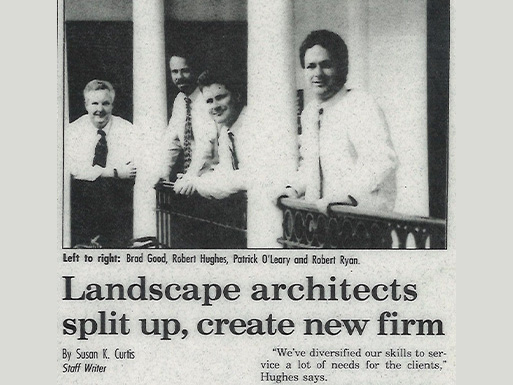
1992 - HGOR FOUNDED
1992In 1992, Founding Principals Bob Hughes, Brad Good, Patrick O’Leary, and Rob Ryan started the firm on a simple but enduring belief that success requires equal commitment to people, the environment, and the client’s return on investment. This philosophy became the foundation for the SEE Philosophy that continues to drive our work today.
-
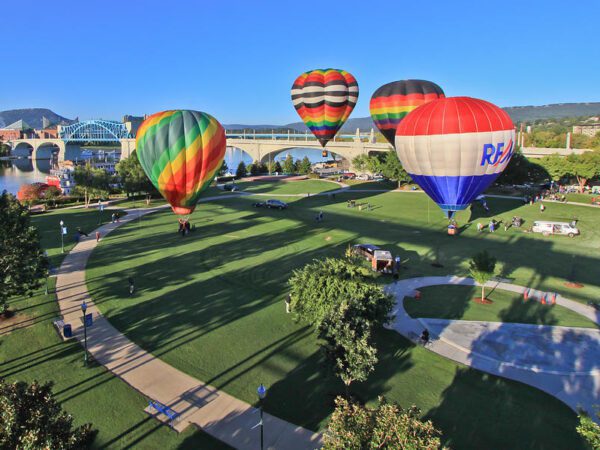
1995 - COOLIDGE PARK
1995This six-acre park transformed Chattanooga’s riverfront into a vibrant civic destination and marked a catalyst project for the revitalization of North Chattanooga. Coolidge Park established a major public open space, stabilized the riverfront edge, and introduced an extensive pedestrian walkway system, while enhancing the adjacent residential streetscape. The park marked a defining moment in the city’s resurgence and contributed to HGOR’s growing regional recognition, earning four design awards across the Southeast over several years following completion.
-
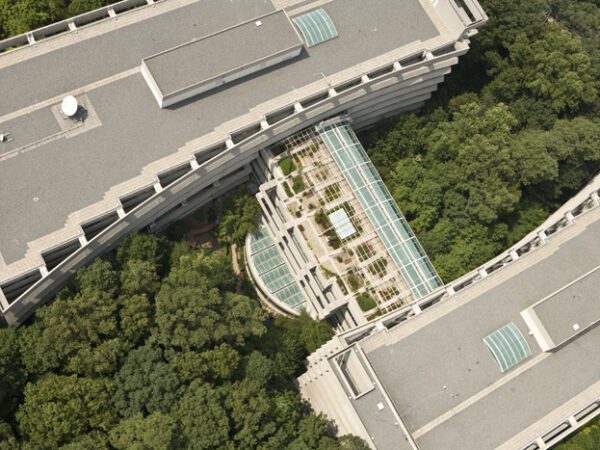
1996 - UPS Corporate Headquarters
1996The UPS Corporate Headquarters marked a pivotal moment for HGOR, establishing a national model for an environmental-first approach within a corporate workplace setting. The master plan for the 35-acre site preserved and celebrated the property’s natural hardwood forest and dramatic topography, organizing two building wings along ridge lines overlooking a ravine and creek.
This strategy shaped future development by protecting interconnected forest systems and revegetating disturbed areas with native plant communities—resulting in a resilient, low-maintenance woodland environment. The project earned numerous state, regional, and national awards, including ASLA’s Southeast Regional President’s Award in 1999—the highest honor bestowed at the regional level.
-
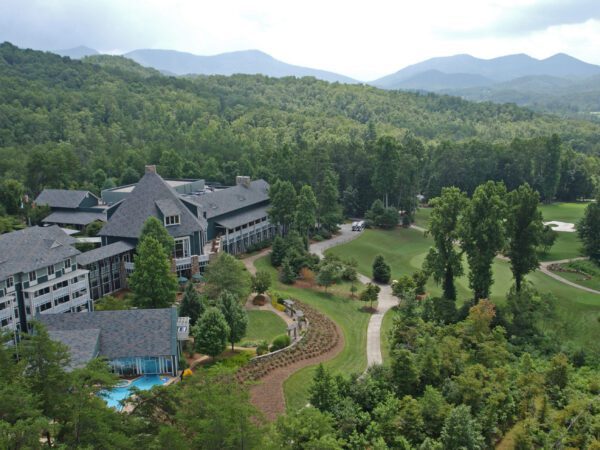
1996 - BRASSTOWN VALLEY
1996HGOR partnered early with the client and the Georgia Department of Natural Resources to identify the ideal site for a mountain resort in North Georgia. The collaborative planning process led to the selection of a 585-acre property shaped by an environmentally driven design approach that embraced natural views, wildlife, and ecological systems.
Corridors were re-routed to improve access while protecting sensitive resources, and HGOR led endangered species surveys to support responsible planning and compliance. The completed resort—featuring a hotel, conference center, championship golf course, and supporting amenities—reflects an authentic vernacular mountain character and has remained a lasting regional destination decades later, earning ASLA recognition at both state and regional levels
-
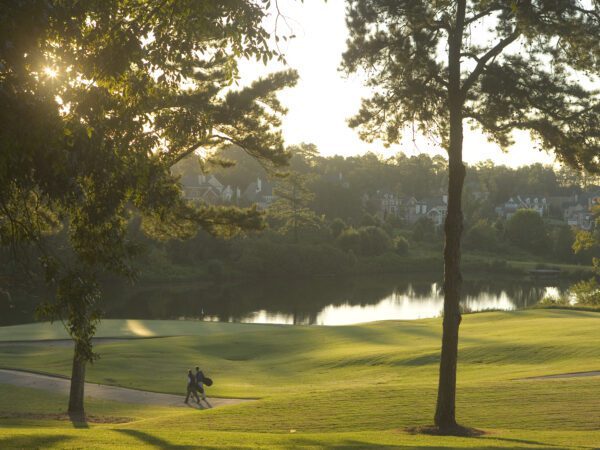
1998 - SUGARLOAF COUNTRY CLUB
1998Sugarloaf Country Club, a 1,400-acre luxury residential community in metro Atlanta, set a new standard for golf club development in the region. Organized around the Greg Norman–designed Tournament Players Course, HGOR played a central role that shaped the overall vision and long-term success of this landmark golf community. Through cohesive planning and amenity-driven community design, HGOR helped define its character and identity, gently woven into the rolling terrain.
-
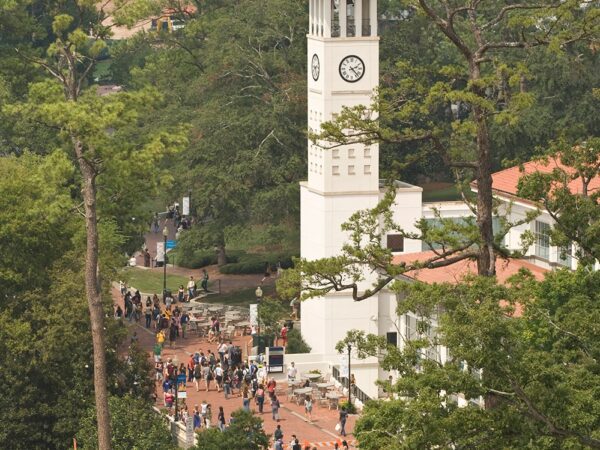
1999 - EMORY UNIVERSITY MASTER PLAN
1999HGOR provided pivotal guidance to Emory University through a comprehensive master plan that shaped the campus’s framework for growth. As one of our earliest campus projects, the plan eliminated roads that once dissected the campus and established Emory’s key pedestrian corridor, celebrating the shift toward more walkable, pedestrian-oriented campuses. HGOR also established cohesive design guidelines for future buildings, open spaces, circulation, lighting, planting, and material selection, creating a unified framework that continues to inform campus evolution today.
-
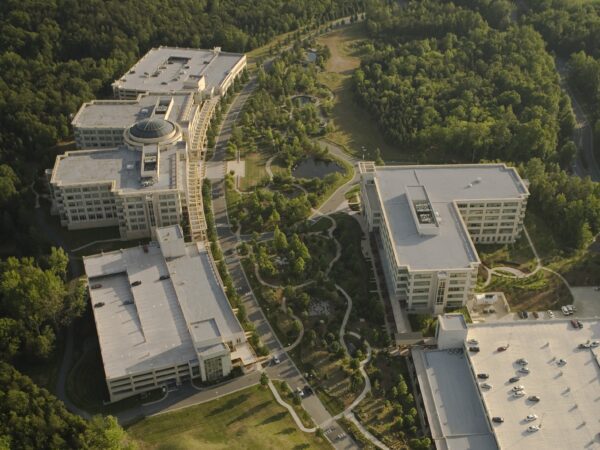
2002 - TIAA-CREF
2002Located on a 137-acre site within Charlotte’s University Research Park, TIAA-CREF became a landmark regional campus shaped by a vision of planning to fit the land, creating lasting value, showcasing a corporate art program, offering educational opportunities, and expressing a strong sense of place in North Carolina. HGOR’s response to this vision was a place that celebrates the state’s three distinct regions—mountain, piedmont, and coastal plain. Site analysis identified a depleted ridgeline, prompting new construction along this edge to preserve the more valuable hardwood forests and organize the campus around a central eight-acre open ground. More than 400 native species, sourced from nurseries throughout the Southeast, were integrated into pathways, bridges, gardens, and spaces of respite. These plant communities were arranged into three regionally inspired gardens, each reflecting their local habitats. To deepen engagement and learning, HGOR also developed an informational guide highlighting each ecosystem and its native species—reinforcing the campus as both workplace and living landscape
-
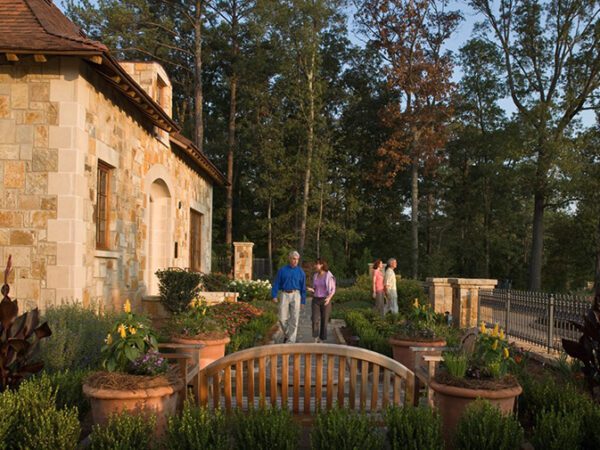
2004 - LE JARDIN
2004HGOR led the planning and landscape architecture for Le Jardin, a distinctive residential community in South Fulton County designed to establish a cohesive European character in the foothills of North Georgia. Several HGOR Principals traveled to Europe to inform the vision, drawing from historic precedents to shape an authentic and immersive environment. The community is composed of two distinct neighborhoods—Giverny, a gated enclave of estate homes centered around two lakes, and Tapestry, a 600-acre community featuring a robust suite of recreational amenities. Developed in collaboration with Gilbert Vahé and inspired by Monet’s Giverny, the plan weaves together gardens, parks, and architectural elements that reinforce a sense of tranquility while elevating the overall residential experience. Le Jardin stands as a refined example of placemaking rooted in cultural precedent.
-
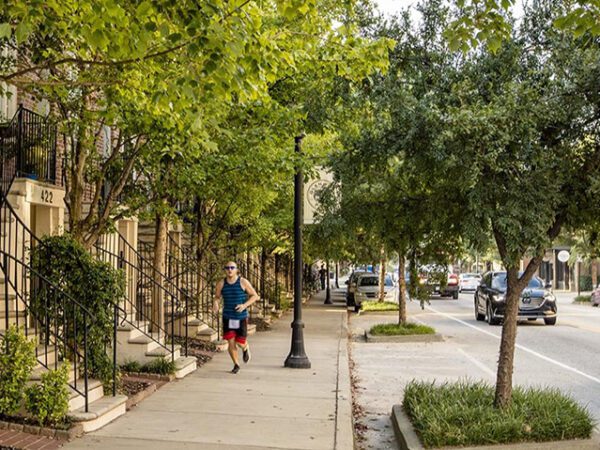
2005 - GLENWOOD PARK
2005HGOR led the landscape architecture for all public realm spaces within the 28-acre Glenwood Park community, helping shape one of Atlanta’s early and most notable New Urbanist developments. In collaboration with Dover, Kohl & Partners, HGOR ensured that streetscapes and public spaces aligned with the master plan and supported the future Atlanta Beltline. At the heart of the community, a two-acre oval park serves both as the social center of neighborhood life and as the project’s primary stormwater management feature, demonstrating an integrated approach to placemaking and infrastructure.
-
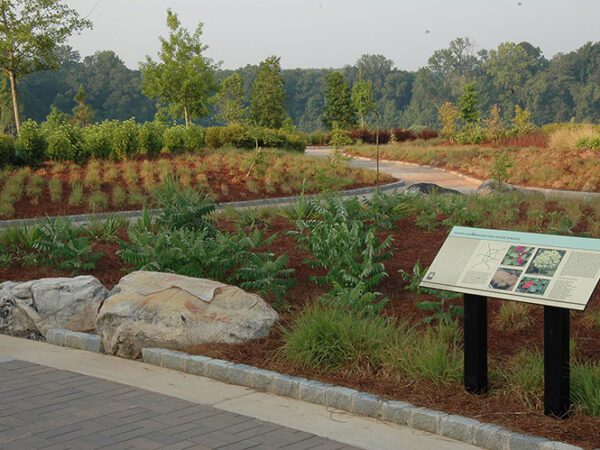
2006 - JOHNS CREEK ENVIRONMENTAL CAMPUS
2006HGOR designed the campus for the Johns Creek Environmental Center in Roswell as a model for water stewardship and sustainable design in response to Georgia’s 2007 drought. The landscape demonstrates source-based stormwater management through permeable pavements and parking areas that sheet-flow into bio-detention swales planted with wetland species to enhance infiltration.
A patio display garden highlights native Piedmont species adapted to ridgeline and rock outcrop conditions, supporting drought resilience and public education. Sustainable infrastructure is thoughtfully paired with cultural design elements, creating an environment that communicates conservation performance while elevating the visitor experience.
-

2009 - SEE PHILOSOPHY TRADEMARKED
2009In 2009, HGOR formally codified its ethos by trademarking its guiding philosophy—We SEE Solutions—a defining framework that unites social, environmental, and economic performance. This philosophy continues to shape the firm’s approach, grounded in knowledge that what we design today will have a lasting impact on generations to come.
-
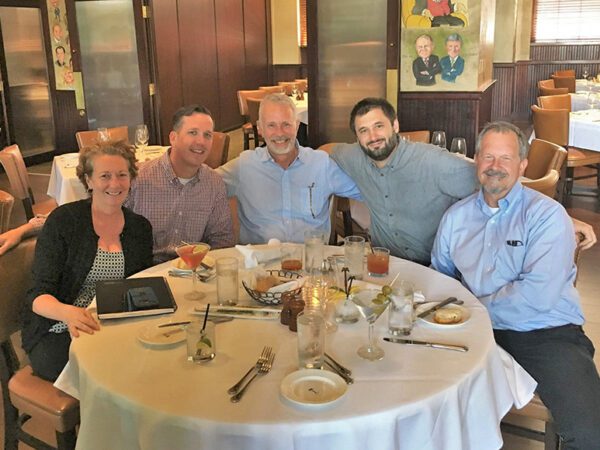
2017 - NEW OWNERSHIP
2017In 2017, HGOR marked its 25th anniversary with the appointment of three new Principals—Chris Mutter, Lauren Standish, and Todd Fuller—joining Steve Sanchez alongside Founding Principal Robert Hughes. This transition re-established a leadership team with a business-forward approach to design and a continued commitment to sustainable, high-performance solutions.
-
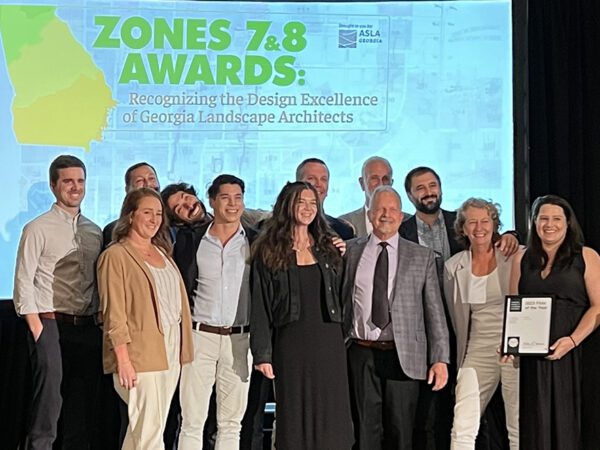
2023 - Georgia ASLA Firm of the Year
2023HGOR was named the 2023 Firm of the Year by the Georgia Chapter of the American Society of Landscape Architects, recognizing the firm’s dedication, expertise, and lasting impact on the profession. The award highlights HGOR’s consistency in planning, design, and innovation, as well as its commitment to shaping sustainable and inspiring environments.
Our Team
Great places begin with great people. Our team brings together diverse backgrounds in landscape architecture, urban planning, art, graphic design, business, ecology, horticulture and more, creating a collaborative practice where ideas are strengthened by many perspectives.

Todd Fuller
Principal
Chris Mutter
Principal
Lauren Standish
Principal
Steve Sanchez
Principal
Bob Hughes
Founding Principal
Michael Bailey
Associate
Paula Adamson
Controller
Matthew Cartledge
Project Manager
Ben Clone
Project Manager
Luke Gregory
Project Manager
Lucy Griner
Project Manager
Meredith Knight
Project Manager
Jackson Gannaway
Senior Landscape Designer
Adeline Carlton
Landscape Designer
Alexis Eiche
Landscape Designer
Jacob Peach
Landscape Designer
Meghan Rigdon
Landscape Designer
Nick Riker
Landscape Designer
Hannah Smith
Landscape Designer
Katie Stenberg
Landscape Designer
Madi Rodriguez
Marketing Manager
Noelia Salazar
Marketing & Social Media Coordinator
Jasmine Hau
Office ManagerCareers
HGOR is a place where smart, talented, and motivated people grow and thrive. We foster a culture of curiosity, creativity, and collaboration where your ideas are heard, your expertise is valued, and your work makes a real difference in the communities we serve.
We are always looking for passionate designers who mirror this commitment to excellence and continuous growth. If this sounds like you, we’d love to connect.