
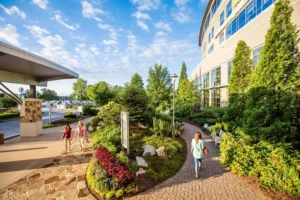
As Principal, Steve Sanchez of HGOR likes to say, “landscape architects have the unique opportunity of designing for all five senses and the changing seasons reinforce this.” In the Southeast, that opportunity carries even more weight because here, the seasons don’t just change the landscape, they change how we live and how we feel. Steve has spent decades designing with that in mind, creating landscapes that do more than look beautiful year-round. “Through smart design,” Steve says, “we can mitigate the extremes of the seasons while celebrating the inherent beauty each one has to offer.”
The Language of the Seasons
From the tender greens and explosive floral display of spring to the dense canopy of summer and fiery tones of fall, our landscapes are a vessel that connect people to the time of year in a way that’s both familiar and grounding. Our plant palette moves and breathes with the rhythm of the seasons, providing shade when the summer sun is relentless, color when the fall air turns crisp, a sense of relief as warm light filters through the bare branches of winter, and a sense of renewal with the flowering of springtime.
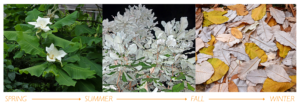
Every landscape plan equals an opportunity to design year-round experiences, whether via spring’s first burst of blooms or the quiet joy of seeing winterberry’s bright red clusters in the cold. To Steve, the Bigleaf Magnolia captures that rhythm perfectly. In spring, its enormous leaves unfurl like a breath of renewal embracing its enormous flowers. In summer, their white undersides flash in the breeze like sunlight on water. As a deciduous plant, those same leaves shed in the fall, making way for warm winter light to provide comfort. “As their pale backs drift to the ground, they leave a dramatic pattern. Some might call it messy,” Steve says, “but I call it nature’s art.”
Layer by Layer: The Art of Planting Design
Steve describes planting design like designing a series of outdoor rooms, where every layer has a purpose and a place. “You start with the trees, they provide vertical structure and a protective awning to each open space,” he explains. Trees provide that sense of enclosure and protection from the elements. “Then you move to the furniture—the shrubs that add eye-level interest and a sense of enclosure, defining more intimate rooms. Within a landscape, shrubs direct views, excite the eye with seasonal interest and often serve as the backdrop to the ground plain. The perennials and groundcovers are the Persian rugs and potpourri—the details that bring the whole space to life and support pollinators.” They are the ephemeral flavor of color, texture, movement and light. But what makes these outdoor rooms special is that along with the three dimensions that define most rooms, landscapes express the fourth dimension of time.
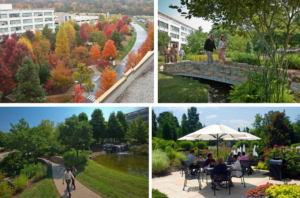 Steve uses digital tools and decades of experience to make sure every project performs 365 days a year. Extensive self-developed planting databases contribute to a living calendar, setting a project’s palette of native plants as a foundation, while tools that chart bloom times and seasonal variances help identify gaps to ensure that the landscape expresses every season with the greatest diversity.
HGOR’s approach at TIAA-CREF is a prime example of our decades of experience designing this sensory gradient. The central seven acre garden celebrates the three main ecoregions of North Carolina. Using over 350 native species, every layer supports the next, balancing structure and spontaneity, rhythm and rest.
Lessons from Practice
Lesson 1: “We are designing with living, changing environments.”
One of the most important lessons in landscape design is understanding how the project will ultimately be maintained. A landscape architect can control the design and installation to ensure the vision is realized, but unlike static art and architecture, our medium is alive.
“Imagine if a museum curator added a little paint to a Picasso or Monet every year,” Steve says. “It sounds absurd, yet landscape architects rely on the hands of others to shape their work year after year, and those hands often have no design training. If you understand how a landscape will be maintained, you can set it up to thrive, not just survive.”
Adding to that complexity is the functional reality of outdoor environments. Sightlines must stay open, stormwater must move, paths and streets must remain unobstructed, and as trees mature, the ecosystem beneath them shifts. Sunny conditions become shaded ones, and the understory needs to respond to the changing environment. Designing with living systems means designing with change. The better we understand that change and the capacity of people responsible for stewarding it, the closer our work comes to lasting as intended.
Lesson 2: “We have to be thoughtful in the choices we make.”
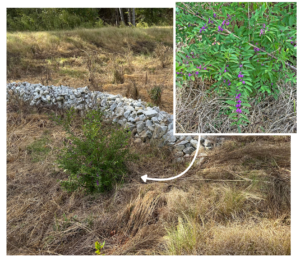
Steve recalled a recent visit to Rowen, a project set in a widely undeveloped part of Gwinnett County. While walking the site designed with a 100% native plant palette, he spotted Callicarpa dichotoma—an Asian beautyberry—growing in one of the detention basins. “I knew we’d see this eventually,” he says, “but it was surprising to find it in such a remote location.”
This Asian species is often favored because it’s smaller and more easily managed than our native species—but the convenience comes at a cost. The plant choices we make don’t stay inside our project boundaries; they influence the broader environment around them. Hundreds of invasive species are now found in our yards and forests due to decades of planting non-native species or using selections that were simply not well understood.
As landscape architects, we have a responsibility to be better stewards of the land. HGOR has made a concerted effort not only to make responsible plant selections but to advance the availability of native species. Under Steve’s leadership, HGOR works directly with nurseries to identify and cultivate native selections that meet the design and aesthetic standards landscape architects seek, providing the proactive collaboration that often becomes the catalyst for bringing new native species into the ornamental trade.
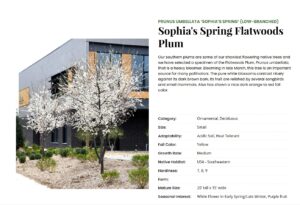 Click here to read more about Steve’s native cultivar discovery with our partner—Bold Spring Nursery!
Lesson 3: “Every region’s sense of place—its genius loci—is best expressed through its native palette.”
Native species are the true storytellers of the Southeast. They resist invasives, attract pollinators, withstand local climate extremes, and reflect the authentic rhythm of the seasons. For Steve, using native plants isn’t a limitation, it’s an opportunity to lean into the richness already present in our landscapes: spring blooms, summer shade, fall color, and winter texture. Native species ground a project in its place, revealing a landscape that feels locally rooted, ecologically resilient, and unmistakably of its region.
A Greater Impact
In the Southeast, where summer heat can rise twenty degrees higher in full sun than under a leafy canopy, thoughtful planting isn’t about aesthetics, it’s what makes the outdoors livable. While shade trees cool surfaces in summer, we intentionally select deciduous species so that when their leaves fall, sunlight can warm those spaces in the harshest of winters.
“That type of canopy is what makes outdoor life comfortable here,” Steve says. But the benefits go far beyond comfort —
Trees act as natural air filters, capturing particulate matter and improving air quality, a consideration that’s especially important in urban and healthcare settings. Steve points to projects like Children’s Healthcare of Atlanta, where a robust tree canopy along nearby interstates helps reduce airborne pollutants, supporting cleaner air and healthier recovery environments for patients.
Seasonal landscapes also encourage interaction with nature, something research consistently links to lower stress, improved focus, and stronger community connection. From the sound of wind in the canopy to the distinctive smell of Summersweet to the visual color shift that signals seasonal change, each sensory layer invites people to pause, engage, and connect with something that contributes to their physical and mental health: cooler air, cleaner water, quieter streets, and more joyful human experiences year-round.
In Steve’s words, “We live our lives in two places, but the outside realm is where our senses are most attuned to. It’s on us to celebrate the seasons by mitigating their extremes and exploiting the sensory stimulants by using informed plant selections to advance the landscapes we design.”
HGOR designs environments that perform 365 days a year, delivering year-round benefits for users while aligning with clients’ maintenance capacities. Reach out to Steve Sanchez to see how thoughtful planting design can elevate your next project.