Columbus, Georgia
Client/Owner: Columbus State University
Size: 132 acres
Status: Completed July 2021
Collaborators: JMZ Architects, McMillan Pazdan Smith
Reclaiming a 132-acre campus around its greatest natural assets
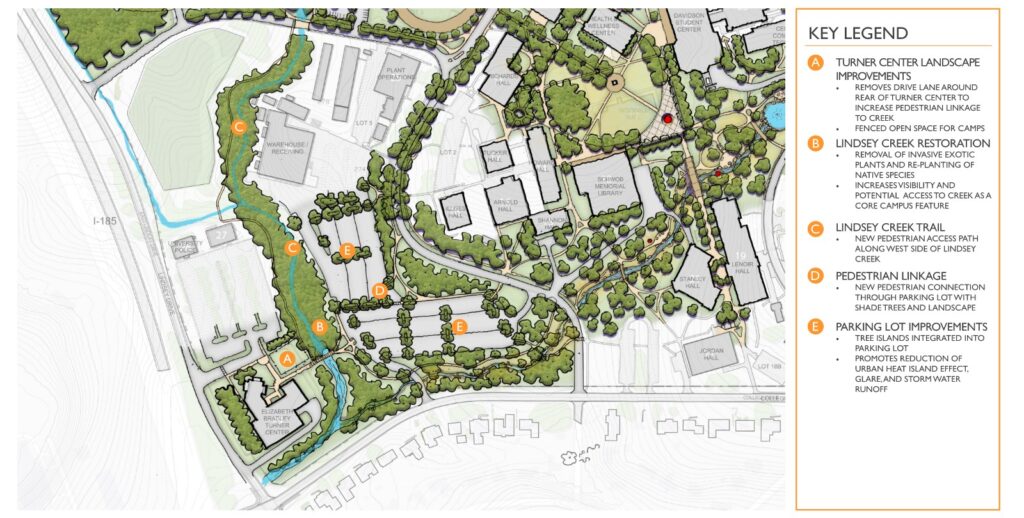
HGOR led the open space master plan for Columbus State University’s 132-acre Main Campus, developing a long-term vision that reconnects students with the campus’s strongest natural, cultural, and social assets. Working alongside a multidisciplinary team, HGOR identified opportunities to improve pedestrian connectivity, restore ecological systems, and create meaningful gathering spaces by rethinking how land was allocated across campus. The resulting framework transforms underutilized infrastructure into a more connected, walkable, and environmentally resilient campus centered on student life.
Turning Excess Pavement Into Campus Opportunity
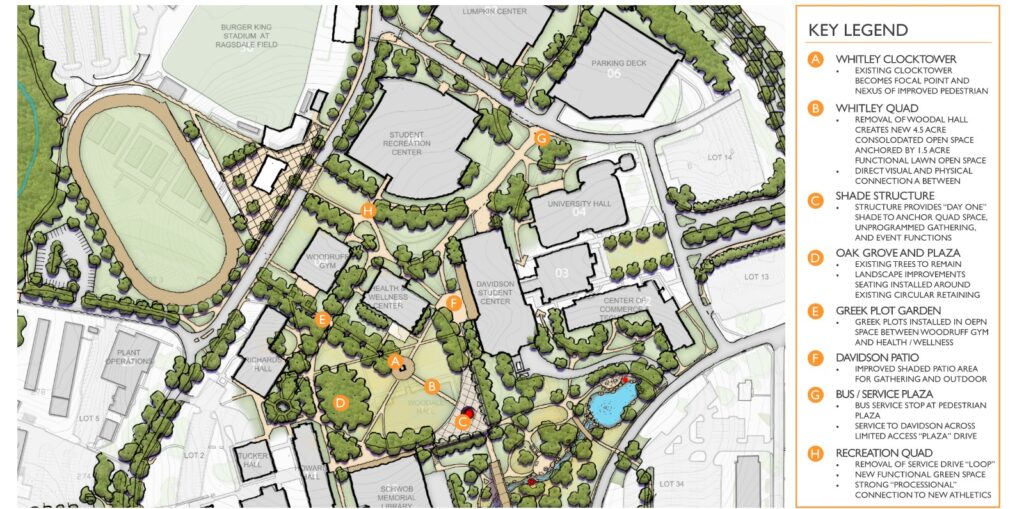
Campus analysis revealed that existing parking exceeded both current and projected demand, creating an opportunity to rethink how valuable land could better serve students. By removing approximately 3 acres of roads and parking, the master plan significantly improves pedestrian circulation while creating space for new open spaces, ecological restoration, and future campus amenities.
Creating a New Center
for Student Life
A new 3-acre central quad establishes a vibrant social heart for campus, anchored by the university’s iconic clocktower. Designed with flexible lawn space, generous shade, and outdoor dining opportunities, the quad creates a welcoming destination that supports everyday student life while strengthening the university’s identity and sense of place.
Restoring The Campus's Natural Identity
The master plan reconnects students with the campus’s defining landscape features, including Lindsey Creek, the Fall Line Trail, and historic groves of live oaks. One of the plan’s strategic moves removed 2 acres of parking in an area with a buried stream, exposing it to more daylight and transforming hidden infrastructure into a new environmentally focused space that celebrates the site’s natural character and improves ecological performance.