Fayetteville, Georgia
Client: Trilith Development, LLC
Size: 235 acres
Completion Date: 2022
Awards:
2024 Merit Award, Georgia ASLA
2020 OBIE Award: Master Planned Community of the Year, Greater Atlanta Homebuilders Association
2020 OBIE Award: Best Landscape Design–Community, Greater Atlanta Homebuilders Association
Collaborators: Lew Oliver
Shaping a Walkable, Mixed-Use Community for Storytellers, Creators, and the Creative-at-Heart
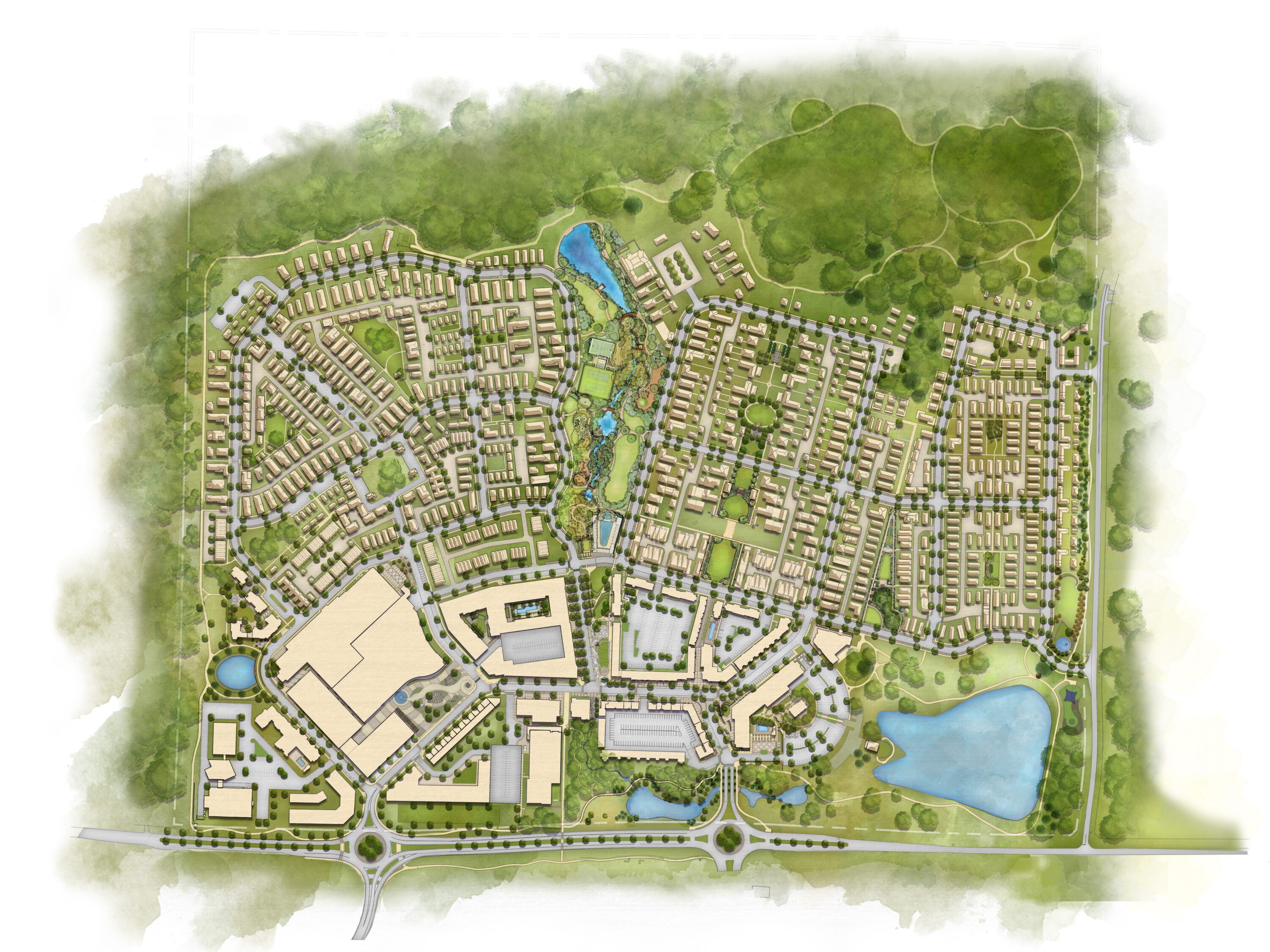
Planned as a destination for storytellers, creatives, and innovators, Town at Trilith is a mixed-use community designed to support a dynamic and connected urban lifestyle. HGOR supported masterplanning efforts and led the design of the public realm, shaping a pedestrian-first environment that unites residential, commercial, and cultural life. Through a network of plazas, parks, trails, and thoughtfully designed streetscapes, the project establishes a flexible framework for daily activity and large-scale events alike. Anchored by a vibrant town center, Trilith’s public spaces serve as an adaptable canvas for artistic expression, social interaction, and community-driven programming—reinforcing the identity of the development as a place where creativity and everyday life intersect.
Pedestrian-First Public Realm
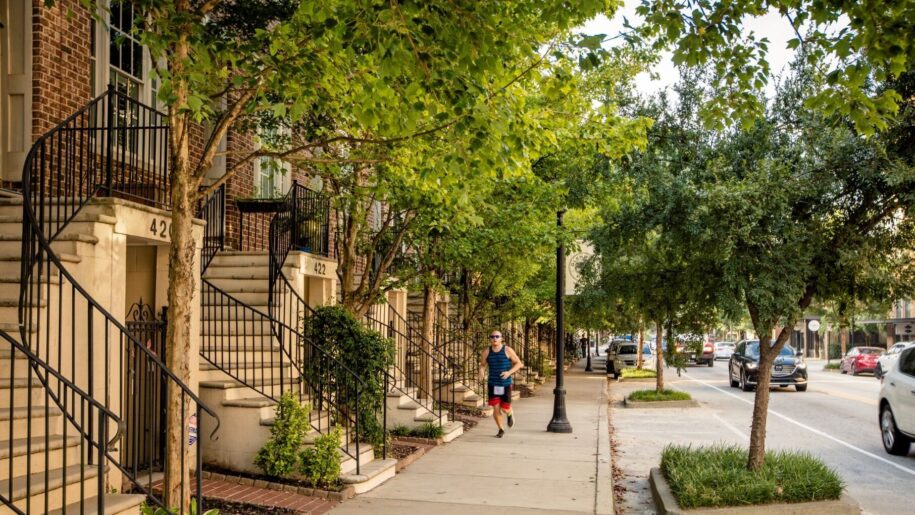
HGOR’s design approach focused on creating an unparalleled pedestrian experience across the 235-acre community. Public spaces were carefully choreographed to prioritize walkability, safety, and comfort while supporting the intensity and diversity of a mixed-use environment. Plazas, parks, trails, and roadway intersections were designed as an integrated system, allowing residents and visitors to move seamlessly through the community while reinforcing a strong sense of place at every scale.
Designing a Creative Core
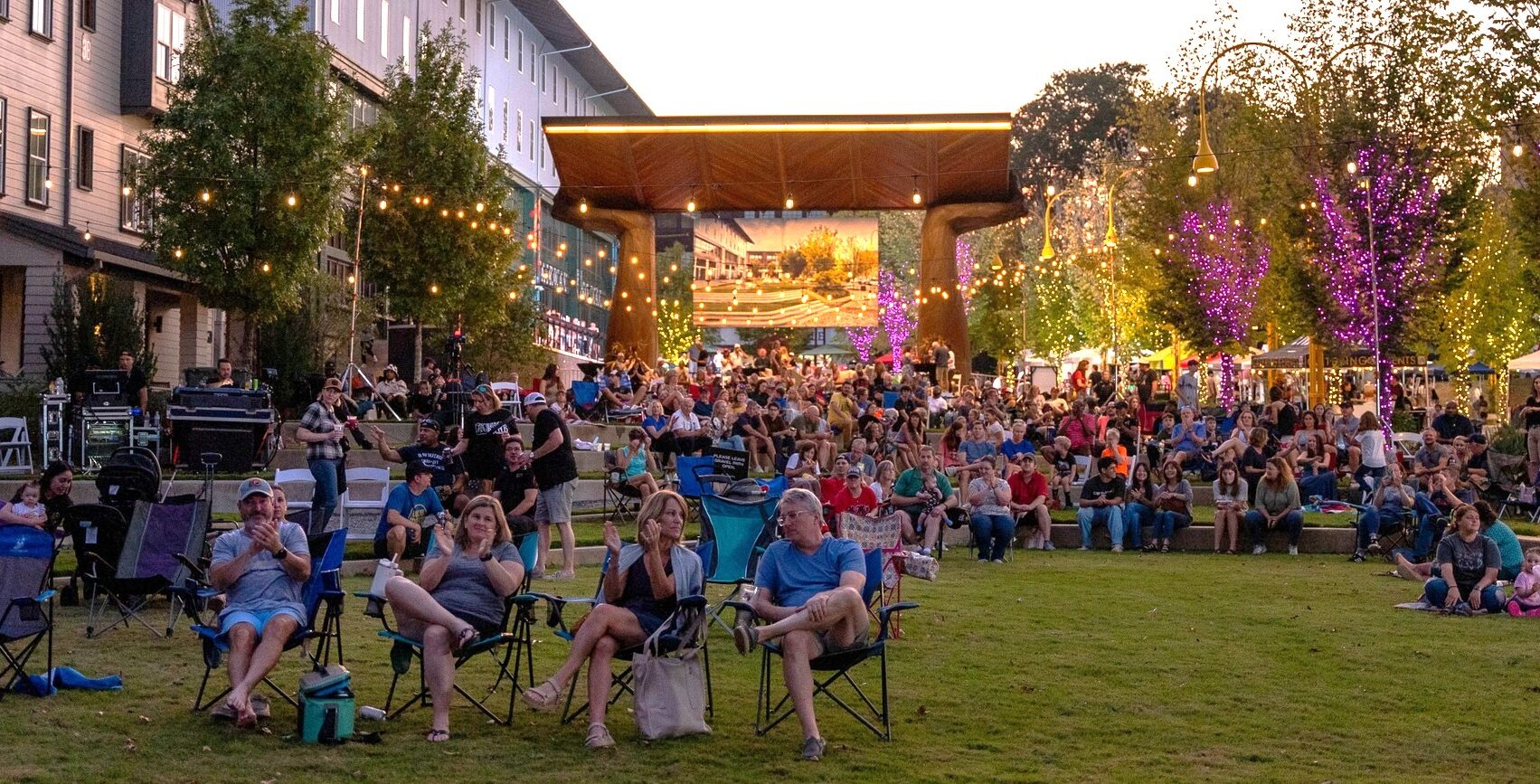
At the heart of the development, the Town Centre and Central Plaza serve as the primary gathering spaces—the social heart of the community. Designed as a flexible platform for public life, Central Plaza accommodates a wide range of activities including performances, artist markets, film screenings, and seasonal programming such as ice skating. This adaptability allows the space to evolve alongside the community, supporting both spontaneous everyday use and curated events that draw people together.
Placemaking & Art Integration
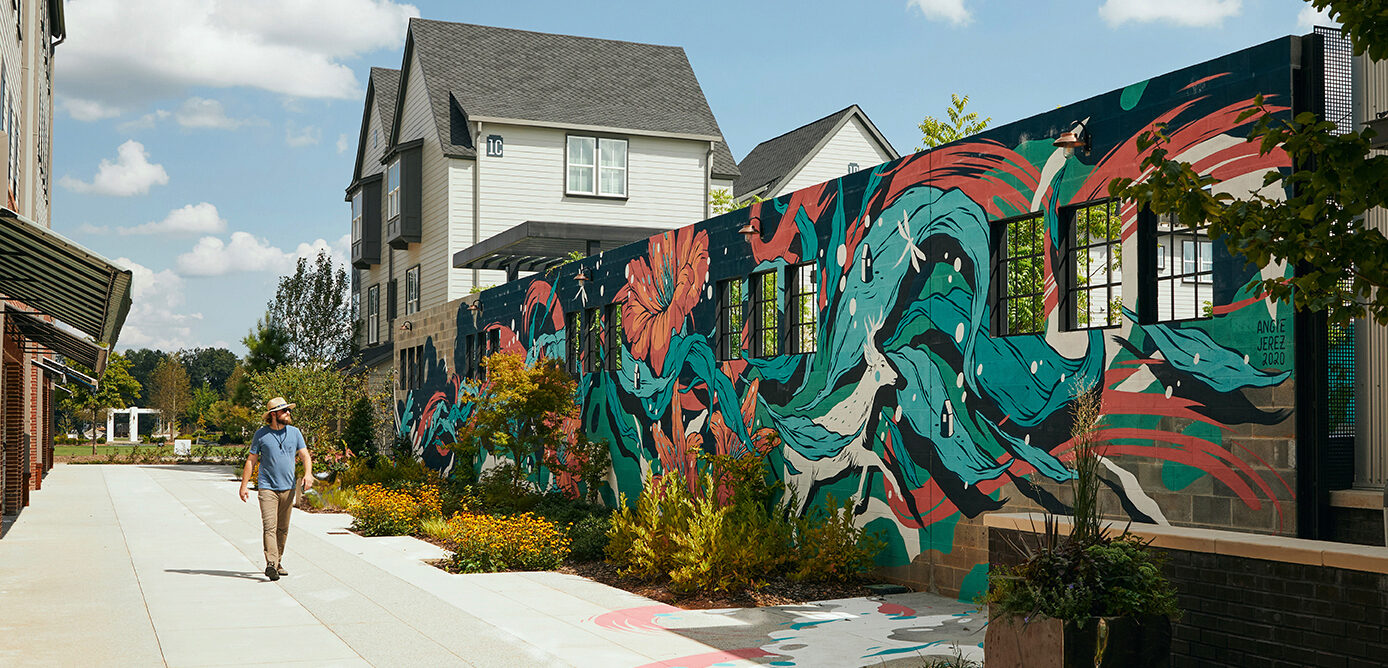
Creative expression is embedded throughout Trilith’s public spaces. HGOR collaborated closely with the ownership team to develop a streetscape and pedestrian environment that actively supports artistic involvement. Sculptural elements, permanent installations, and rotating exhibits are integrated into plazas and corridors, with many pieces driven by local artists and community members. This approach transforms the public realm into a living gallery—one that reflects the evolving character and culture of Trilith itself.
Most notably, HGOR worked closely with sculptural artist William Massey to incorporate a series of bold, oversized, and human-like installations in the Central Plaza. These sculptures define the plaza’s identity and create a sense of awe and wonder, while doubling as inviting, functional elements that elevate the pedestrian experience.
Programmed for Flexibility & Resilience
Flexibility was a guiding principle across all public space elements. Dark sky compliant lighting and intentional site furnishings were designed to be both functional and expressive, supporting day-to-night use and long-term sustainability. Creative stormwater management design was thoughtfully integrated into the landscape to serve both environmental performance and the human experience through play streams and interactive water features, thus reinforcing sustainability while achieving placemaking goals.
Scale, Growth & Impact
Spanning 235 acres, the community includes over 1,200 residences and approximately 270,000 square feet of office, restaurant, and retail space. With the first phase of residential development and a significant portion of the town center complete, Trilith has already established itself as a national model for creative mixed-use development. The public realm plays a central role in this success—blurring the boundaries between work, leisure, and culture while fostering a strong and engaged sense of community.