Atlanta, Georgia
Client: AMLI Residential
Size: 16 acres
Status: Completed 2014
Awards:
2023 Honor Award, Southeast Regional ASLA
2018 Award of Excellence, Georgia ASLA
Collaborators: N/A
Reframing a flexible urban district around shared open space & stormwater amenities.
HGOR was engaged by AMLI Residential to reimagine the master plan for a large urban property previously entitled for nearly 4,000 condominium units across nine towers. The original plan treated the site as a single superblock, limiting flexibility and disconnecting the development from the surrounding urban fabric. HGOR’s revised master plan reintroduced the city grid, organizing the property into walkable blocks that could be developed independently while maintaining a cohesive identity. Anchored by a central park that also functions as stormwater infrastructure, the plan creates a vibrant public realm, improves connectivity to nearby transit, and restores long-term economic viability to the site.
Reintroducing the Urban Grid
HGOR’s first step was to study the broader urban framework surrounding the site. Rather than continuing the superblock approach, the revised master plan extends the existing street network through the property, creating a series of walkable blocks or development pods. This framework allows parcels to be developed individually or collectively, increasing flexibility while strengthening the site’s relationship to the surrounding city.
Aggregating Open Space for Maximum Impact
Instead of dispersing required open space throughout individual parcels, the plan consolidates these areas into a central park. This approach maximizes developable land across the blocks while establishing a strong community amenity and organizing feature. The park becomes the heart of the development—providing recreation, views, and gathering space while reinforcing the overall identity of the district.
Stormwater as Public Infrastructure
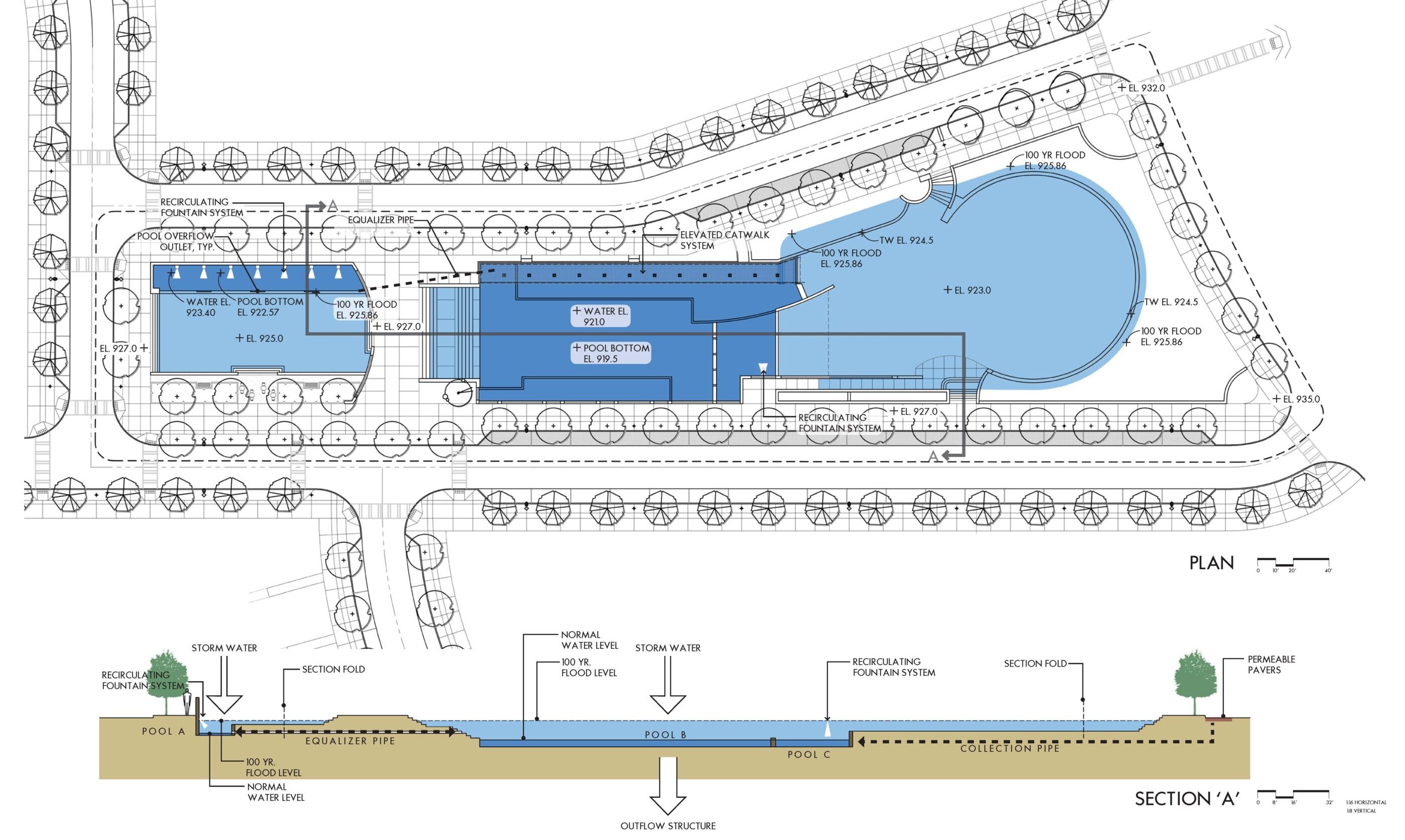
The central park also serves as a key component of the site’s stormwater management strategy. HGOR developed a multi-tiered system that captures water quality and two-year storm events within a lower wet pond, while larger storm events are accommodated across adjacent park areas. This integrated approach eliminates the need for a costly underground vault system, allowing stormwater infrastructure to double as a visible landscape amenity.
Transit Connectivity &
Walkable Urbanism
Extending the street grid also creates direct pedestrian connections to the nearby MARTA transit station. Streetscapes throughout the development are designed to prioritize walkability, with generous sidewalks and a diverse canopy of street trees creating distinct character from block to block. These improvements strengthen connectivity to surrounding neighborhoods while encouraging transit-oriented living.
Design Character &
Material Expression
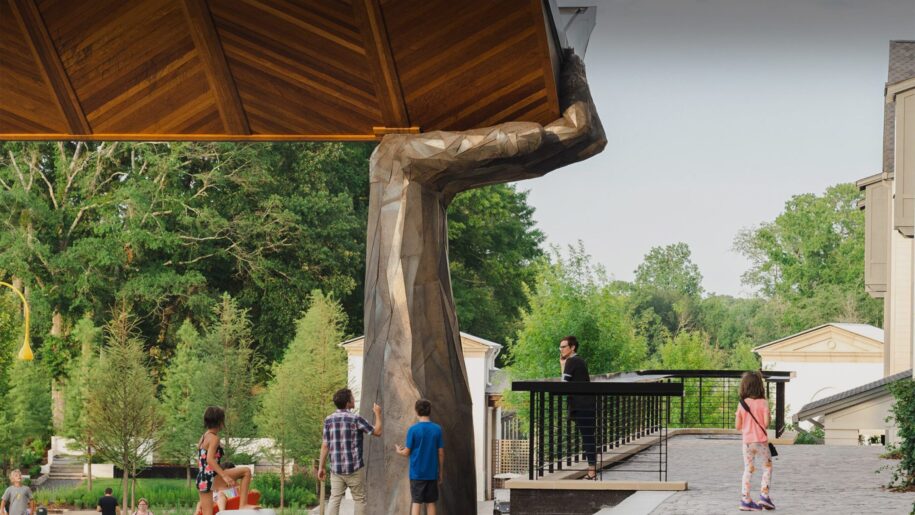
Landscape elements throughout the park emphasize durability and warmth, with roughhewn orchard stone walls and cast stone caps contrasting with a lightweight metal catwalk structure. The design creates a layered landscape experience while reinforcing the park’s role as both infrastructure and public space.
Economic & Environmental Outcomes
By restructuring the site around walkable blocks, shared open space, and integrated infrastructure, the revised master plan restored the property’s full pre-recession value while creating a more resilient and adaptable development framework. The aggregated park serves the entire community while simultaneously improving stormwater performance and environmental stewardship—demonstrating how thoughtful planning can deliver both economic and ecological benefits.